Category: Australia

  • back to Sydney, conclusion

    back to Sydney, conclusion

    The last days in Australia. Only a few hundred km to Sydney. We are moving on along the Murray River. The area is dominated by fruits, vegetables and wine. The vegetation is greener again. You can see that the environment is more water-rich.

    28.03.
    Echuca, also on the Murray River, once had the largest inland port in Australia. But the expansion of the road and rail network led to its downfall. Echuca seems to have switched to tourism successfully.

    29.03.
    Further along the Murray River towards Albury. Albury is often named as a stopover on the route from Sydney to Melbourne. It is located on the Hume Highway 31, the connection between the two cities. Widely visible on a hill is the Albury War Memorial.

    30.03.
    Canberra is a very spacious and green city. If you drive from the outskirts towards the center, it seems the infrastructure was planned for at least three times more people than living there. Canberra is a planned city and was founded as Australia could not decide whether Sydney or Melbourne should be the capital of Australia.

    31.03.
    Today’s destination are the Blue Mountains. Before moving on, we stop at one of the many parks to take some pictures. There it happens. I want to climb up somewhere, slide and fall to my knees. The result can be read in the following post.
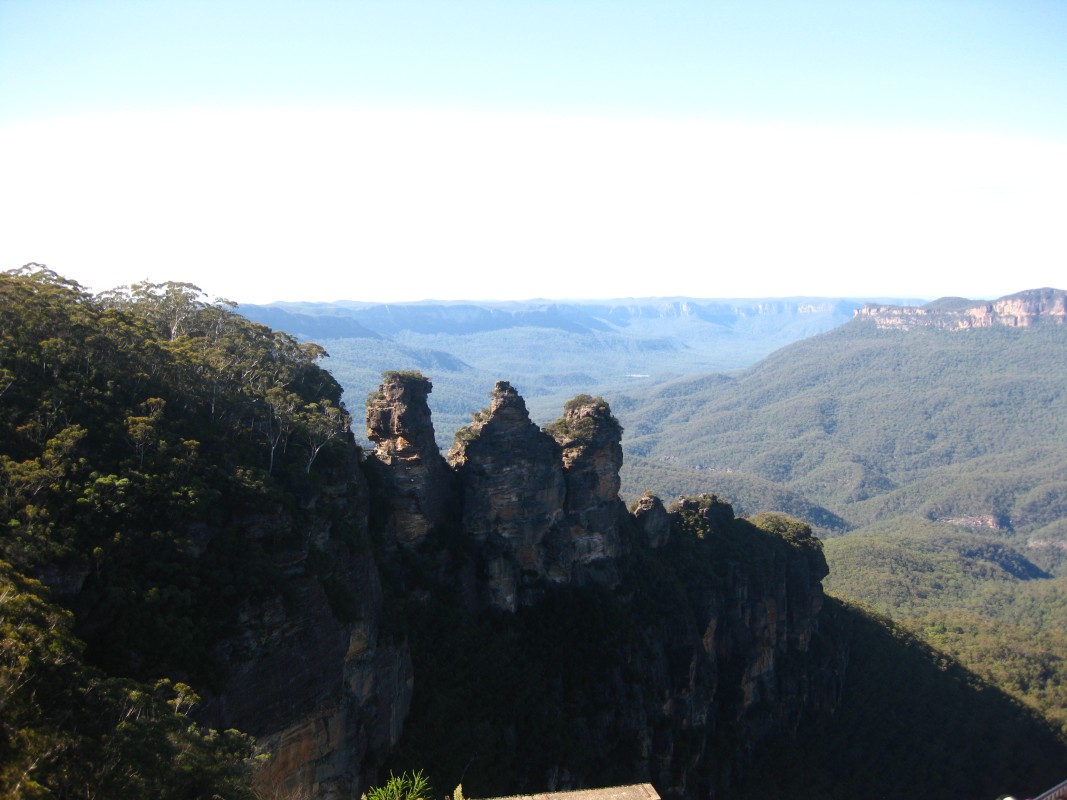
    The Blue Mountains are about 100 km east of Sydney, and is therefore a popular destination for tourists and Sydney’s citizens. The Blue Mountains as most known for the Three Sisters rock formation – by Aboriginal history three sisters petrified.

    01.04.
    We return to Sydney, Wolfgang and Thomas are hopping off at a hostel close to the harbor bridge, as they stay another four days in Sydney. I return the car and go home.

    Summary
    It was great to be back in Australia again. I visited old places, refreshed memories and made new experiences. I haven’t been that close to the animal world on my earlier visits, like I was this time.
    The three of us had a good time. In my opinion, we had no problems. We met great people and sometimes had a party with them. This month was over so fast.
    In my opinion, we were driving too much in this “short” time. We spent about 8.000km on the road. But there are not many other possibilities if you want to go to Uluru on land.

    Regarding the financial part, for Europeans Australia is currently an expensive country to visit. You can expect about 20% higher prices for food and eating. The prices for accommodation were not that high, in my opinion, but it depends on the region. Popular tourist destinations are very expensive, but you can stay for reasonable prices in other areas. We had a mix of hostels and motels. Sometimes it was cheaper to take a motel room than to stay in a shared room in a youth hostel. Alcohol costs at least double the price than in Austria.
    The trip had an “exciting” start and unfortunate end, interrupting my further travel plans.
    Nevertheless, a wonderful trip.

    Thank you for reading, Jürgen.
  • Kings Canyon and back

    Kings Canyon and back

    22.03.
    We left Uluru and continued to Kings Canyon. The distance was “only” 300 km, a walk. At Kings Canyon there is only a small resort with a gas station, a small shop, bar, restaurant and accommodation from camping to luxury. When booking the hostel something went wrong and when we arrived we were five people in a four-bed room. After complaining, we got an upgrade to the expensive cabins. Large rooms, great beds. Luxury compared to what we had until now sometimes.
    Due to the heat the Kings Canyon Walk was closed. We spent the afternoon in the resort and decided to get up early the next morning to do the Kings Canyon Walk.

    23.03.
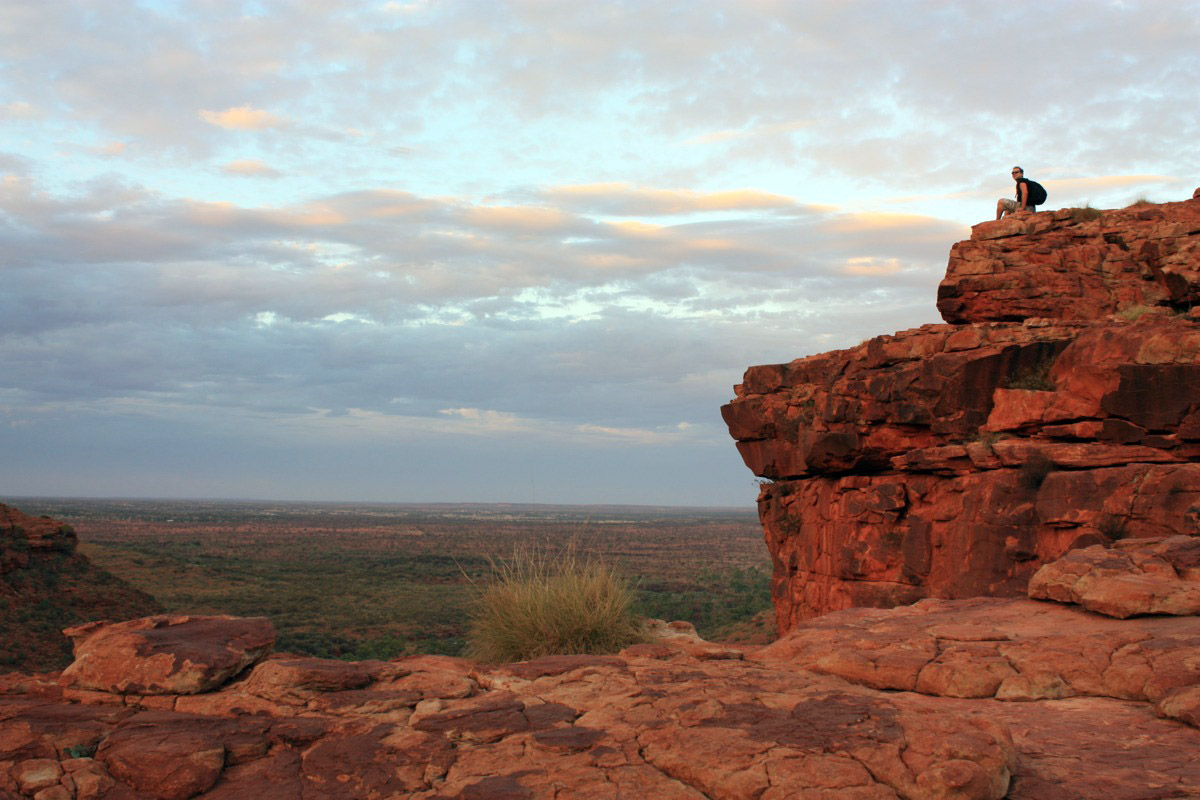
    Getting up at 5:30. We are half an hour before sunrise at the Kings Canyon, which is about 10km from the resort. It’s still dark, but on the horizon, there is already some light. The Kings Canyon walk starts with a 100 to 150 meter climb up the mountain, before you reach the plateau, which you walk along, before you descend again into the “Garden of Eden”, a green oasis in the middle of the Canyon. We thought that we were the first at the starting point at this time in the morning and that we had to climb over the barrier. Far from it. The first people were already halfway up the mountain. Most of them belonged to groups walking with a guide. They stopped constantly to get something told. We overtook them all and had the oasis for a few minutes only for us before the first group rushed in.

    There is not much to tell about these days. Most of the time we spent in the car.
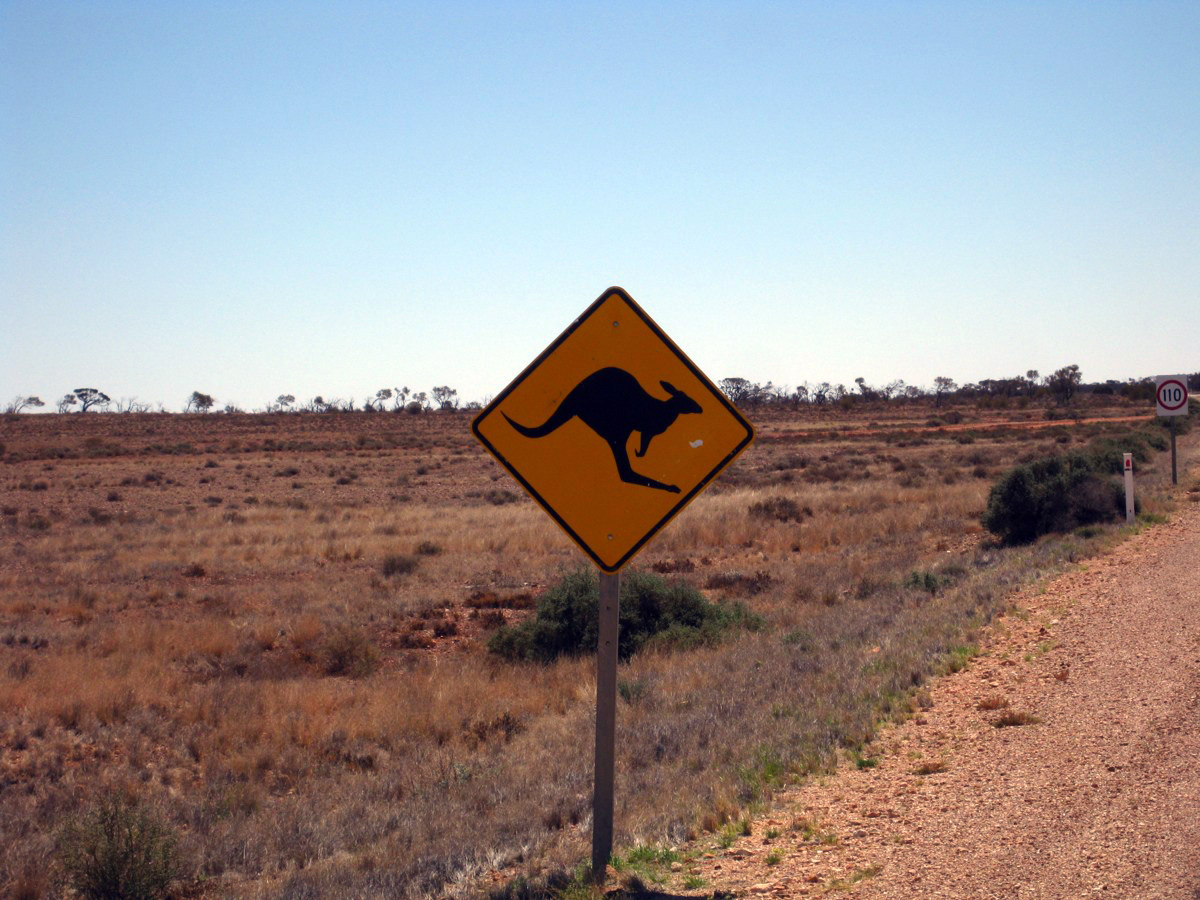
    The next two days we went from the center of Australia down again the same way we went up a few days before .. Coober Pedy, Port Augusta. In Coober Pedy, we spend another night in Radekas Backbackers. Martin, the owner, made a good price for coming back, perhaps too because our cooling box was stolen during our first stay. On the way back we see a lot of vultures to feast on the kangaroo carcasses.

    Looks like Port Augusta got an upgrade. I have it differently, not so beautiful, in my memory. The promenade along the estuary looks really idyllic. We slept in an old inn. I love those old buildings in colonial style, from the 18xx century with the creaking stairs and the high ceilings. We have kangaroo steak for dinner .. excellent taste. At Kings Canyon I had eaten pizza with camel meat. I did not like camel meat. The meat had a strange new flavor. The consistency of the flesh, I will describe as “grainy”.

    25.03.
    The next day we traveled to Broken Hill, a mining town. Another 400km with little in between. The landscape is still bleak, we are still in the outback.
    In Broken Hill we stay at the Palace Hotel. The hotel was part of the film “Priscilla, Queen of the Desert,” a travesty film. A great old building with a huge veranda on the first floor. The ceilings are painted with images of nature. The best days of the hotel are already gone, but it has its charm. In the evening the film “Harold and Maude” was shown in the great hall of the hotel
    On the balcony we met Lesley, a really nice and funny little elderly lady. She has already had a glass of wine or two or maybe three. She is on tour with two friends from New York. Lesley gives us hints where we should go and what we should do on our further way, and makes vigorous promotion of the area. Sometime in between she admits that she works at a tourist office for the region or similar. It was really nice to meet her.
    She also tells us that we should drive to Lake Mungo National Park near Mildura.

    26.03.
    Broken Hill to Mildura, 300 km back to “civilization.”
    Goodbye you vastness, goodbye you endless roads, bye you rust-red earth and you barren land. After about 4,200 km in 9 days, we decide to stay for two nights in Mildura. Good service deserves advertising. We stay at the 7th Street Motel http://www.7thstreetmotelmildura.com.au/. Very good rooms, very good location, a few minutes walk to the Murray River, a few minutes walk to shops, restaurants, bars. Very nice and friendly owners and all for a reasonable price. Stefanos Restaurant http://www.stefano.com.au/ is also just a few minutes away. Stefano is an Italian and is likely to have come to some fame as a cook and cookbook writer. Connected to the restaurant, or maybe vice versa, there is the local brewery with a variety of tasty beers.

    27.03.
    We follow the advice of Lesley and drive to Lake Mungo National Park. In Lake Mungo a lot of archaeological findings were made. Including about 40,000 year-old human remains and some 60,000-year-old other fossils. Based on these findings, it is assumed that there has been a dense permanent settlement by Aborigines.
    The distance from Mildura is about 110 km in one direction. About 20 km after Mildura the paved road ends. It’s a hell of a ride over 90 km on a gravel road, which was not intended for our car. For a long time we did not see any other cars. We had only two bottles of water with us and did not control whether we had a spare tire in the car, or not.
    The lake has dried up for a long time. Since the trail in the national park is a lot worse than the dirt road there, we drive only a few miles to the first lookout.
    We are welcomed by sand dunes, rocky remnants and a hot wind that blows the fine granulated sand through the air. A truly inhospitable environment.

    Thanks for reading, Jürgen.

  • Adelaide to Uluru

    Adelaide to Uluru

    We arrive in the Barossa Valley on Sunday 17.03 at about noon. There are a lot of parks around the center, like a green belt. Time zone changed and we won half an hour. Yes, you read correctly, half an hour. When checking in at the hostel, the counter person gave us a tip where to find an irish pub (P.J. O’Briens). It was likely that there would be a lot of people celebrating St. Patricks Day. The pub was about 30 minutes walking distance from the hostel. We arrived there at about 4pm. The pub was already full, a band was playing and you could see that one or another person had already started celebrating hours ago. We started with a glass of whiskey and a beer. After a short time we met some people from the Adelaide suburbs. The result was a really great evening. For me it ended at about 1 in the morning with a burger at Hungry Jacks (fast food restaurant). Monday it took some time to get out of bed. It’s my third time now in Adelaide but again I did not see very much of the city. Adelaide has about 1.5 million citizens. I’m sure there is a lot to see. Maybe next time.

    19.03.
    Today we have a long ride of about 850 km. Today’s goal is Coober Pedy. We start early in the morning. After about 300 km we reach Port Augusta. From Port Augusta you can go in all directions. West to Perth, East to Sydney, back South or up to Darwin, directly to the Outback. From Port Augusta to Coober Pedy it’s more than 500 km. There are only five or six villages or road houses on the way. Endless wideness opens. Even if the vegetation is the same over long distances, it is very different as well. At the beginning we drive through farmlands covered in a grayish yellow, as we have seen them in the South before. Soon we could see the rusty red soil Australia is known for.  The scenery is meagre and dry again littered with smaller trees and bushes. Then again we are driving through areas that look like stone desserts. They are covered with knee high round bushes. The colors change from yellow to grey to green to red.

    We approach Coober Pedy in the late afternoon. Coober Pedy is an Opal mining town, if not the most known. On the way there we could see thousands of small spoil heaps, which look like small cones spread all over the area. A lot of facilities are under the earth, built into the tunnels to escape the heat on the surface. Most of the attractions have already closed. Maybe we have some time on our way back to see one or two.
    Most of the rooms of the hostel are underground too. We have a beer with Martin, who runs the hostel. He looks like what you imagine of an Australian. A smaller boney fellow with a long white beard. The best times of his green Aussie hat are over, bleached, outworn and with a hole.

    The next day, 20.03., Martin wants to take a photo with us in front of the hostel. “That there are not only asian fellows on the photo wall”, as he says.
    We had to discover that someone took our cooling box. Ham, cheese, beans, tuna and some ingredients like chili sauce and honey were gone. The biggest loss was the rest of Toms 27$ wine from Barossa Valley. It was the second loss on this journey. My navigation device has gone after Melbourne. We stayed in a camping place in a cabin. The next day it was gone. We frisked the cabin several times and could not find it.

    The ride Uluru is fatiguing. Kilometer after Kilometer straight ahead through solitude. Because of the heat there were mirages on the horizon. Road trains appear in those mirages as small points, like they come through a gate from another dimension to ours, just to pass us after a few minutes with thunder. Road trains are large trucks who tow usually three trailers, sometimes more. They can get 55 meters long. On the front they have so-called bull-bars. They stop for nothing Neither for kangaroos nor for cows or other animals. They run over everything getting in their way. We can see a lot of dead kangaroos on the road, sometimes calves and cows too, because some of the farms the highways are going through are unfenced.

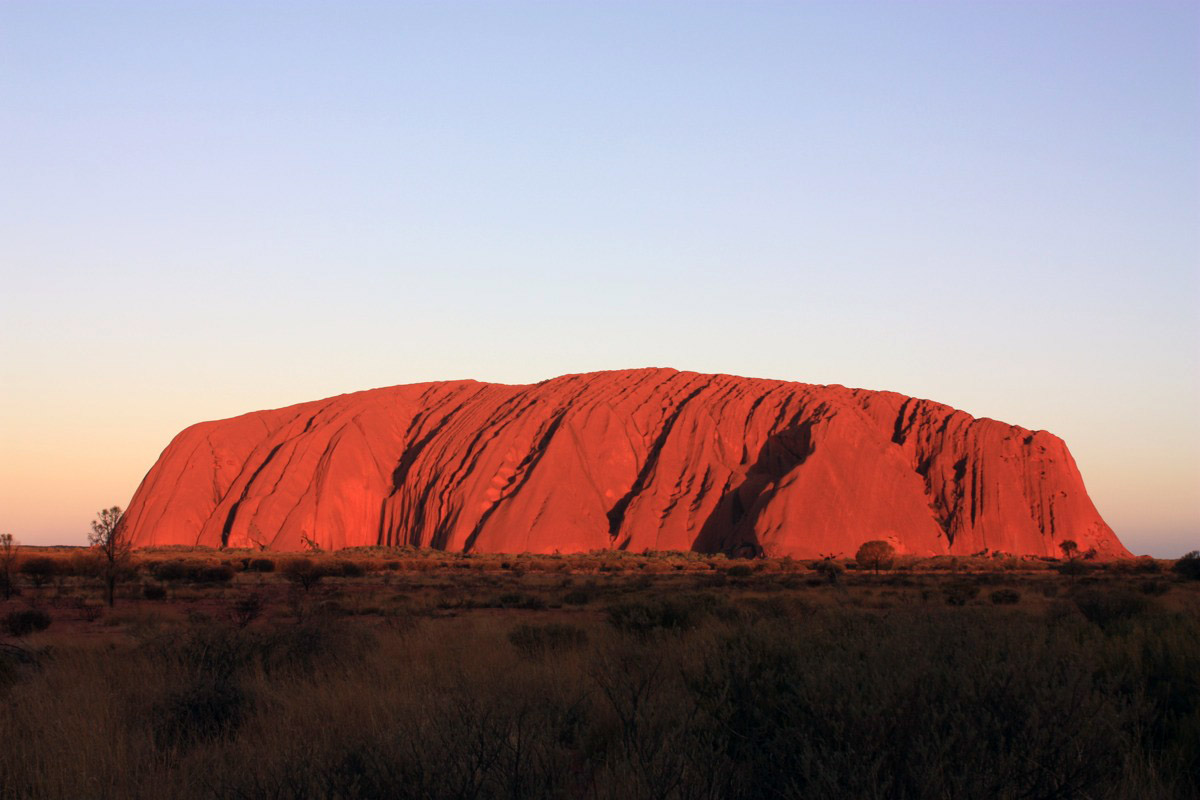
    We arrive at about 4pm at Yulara. We are in the Northern Territory which is another timezone, one hour earlier than before. Yulara is the resort at Uluru. The resort is like a small city with all amenities. It’s about 20 km from Uluru and 50 km from Kata Tjuta. It has about 40 C and just 7% humidity. In the evening we drive to Uluru to see the sunset.

    21.03.
    Like the last days we get up early. Today before six o’clock. But as we are driving large distances for the next couple of days too, I think we have to get used to it. It is still dark when we have breakfast. In the distance you can hear how the dingoes welcome the morning howling. We arrive in time at the sunrise point. After that we start to do the walk around the Uluru. If you visit every viewpoint the walk is about 12 km long. At the beginning we are walking in the shadow of Uluru. But soon the sun is catching us, burning down like hell. Some of the walks at Uluru and Kata Tjuta are closed from 11am, when temperatures get over 36C.
    And then there are the flies. They are small but “aggressive”. Searching for some moisture, hundreds of them attack our sweating bodies. It is very annoying when they get into nose and ears. Insect repellent did not help in any way. A lot of visitors have a hat with a net. A good investment. I try to keep away the flies with a stick with leaves. Wolfgang is putting a white shirt around his head. And Thomas almost killed himself with repellent. It takes about 2 1/2 hours to walk around Uluru. Park authorities recommend to finish walks before 11am and then not do exhausting things. We spend the afternoon with eating, watching TV and writing the blog.

    In the evening we go to Kata Tjuta. You can see the round rocks from a far distance and can watch them long when approaching. It seems a bit like they are filled with life, like some kind of animal that fell asleep …

    Thank you for reading, Juergen.

  • Barossa Valley

    Barossa Valley

    15.05. 

    We are leaving Robe and heading to Barossa Valley. While the population in south east Australia is very dense, we are driving kilometer for kilometer through empty regions, often just straight ahead. The navi says “38km tip the next waypoint”, then “Stay 65km on this street”. We pass a few small villages on the route. For about 300km it’s mostly the same. The vegetation is getting dry again. There are huge plains on our route. Mainly there are farms. You often can see cows and sheeps grazing. I ask myself, how can they get full with this meagre food. Maybe they need the huge land, to get the animals full. 

    The landscape is colored in a grey yellow. You can see signs everywhere that fire is strictly prohibited. Sometimes you can see traces of recent fire, like it could be seen close to Sydney. A denser population starts again as we get closer to Adelaide. 

    We are in the Adelaide Hills now, and visit “Hahndorf”. Hahndorf is one of the first German settlements in Australia and a tourist attraction. From a Brauhaus, to butcher and German bakeries you can find a lot of things here. 

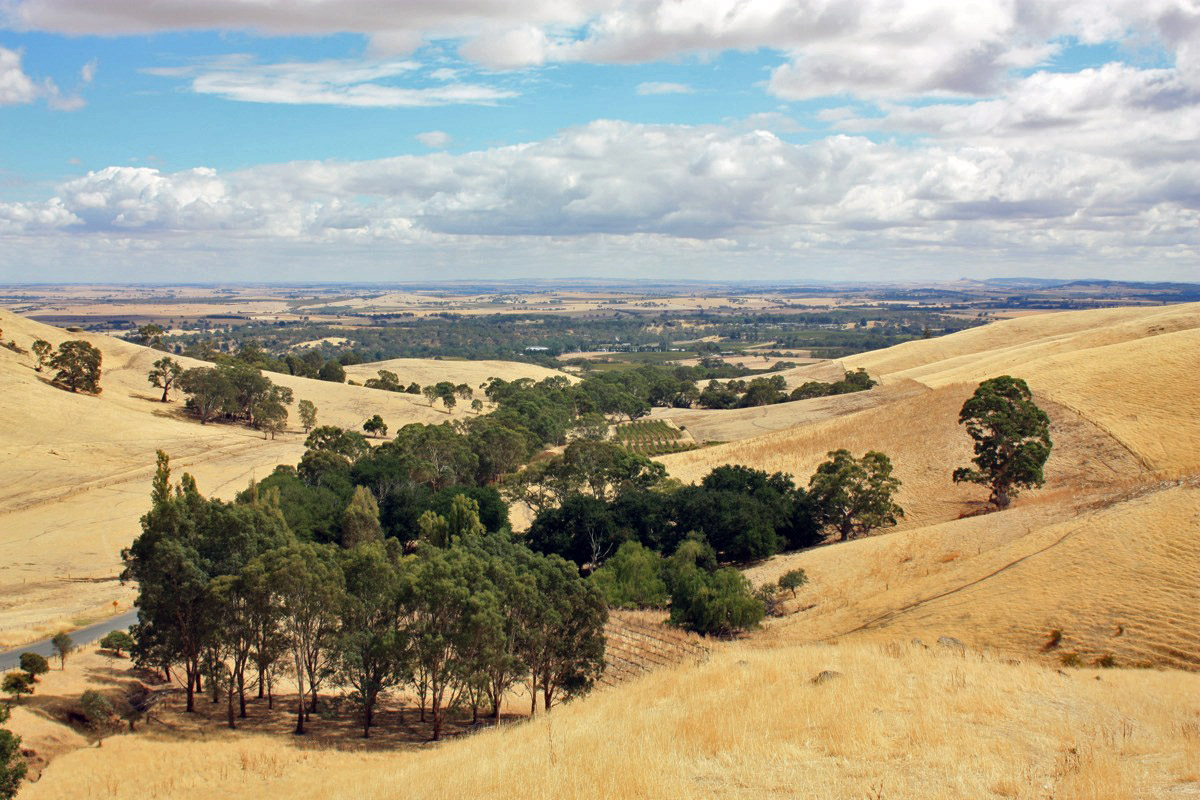
    Attaching the Adelaide Hills is the Barossa Valley. It’s called the most known wine production region in Australia. The most known wine made here is the Shiraz. We are driving through the villages Willamstown, Lyndoch and stay in Nurioopta for two nights. A lot of known wine makers can be found here: Penfolds, Lindemans, Wolf Blass, … .

    On March 16th we want to drive through the Barossa Valley. We stopped at the visitors center of the winery Jacob’s Creek. But about noon is to early to start with wine tasting. So we are moving on and visit different villages and several lookouts in the area. Early afternoon we stop at the winery Wolf Blass. We try different wines, which is free. For each wine, they tell you about the origin and the special taste of the wine. To taste the 140$ and the 170$ wine you have to pay 15$. The service personnel says that it was a dry year. There was only 25 millimeters of rain. So they expect a meagre crop. On the other side it means higher prices for the wine. When a quick but heavy rainstorm passes the whole personnel was excited.

    Wolf Blass has only screw-caps on its bottle. They explained that cork can absorb environmental impacts when growing and release them to the wine again. It is very expensive to get high quality cork. And it’s less likely the wine will get bad with screw-caps. During a testing phase they filled wine from the same casks to bottles with cork and to bottles with screw-caps. They opened them six years later and they said it was like drinking two different kinds of wines.

    Tomorrow we are heading to Adelaide.

    Thank you for reading, Jürgen.

  • Melbourne to Adelaide

    Melbourne to Adelaide

    We are leaving Melbourne on March 11th. Over the next few days we want to go to Adelaide along the Great Ocean Road. The 180km for this day is not so easy, as we have been out until late in Melbourne. We try to get to Apollo Bay as fast as possible and are happy when we checked in there at about 2pm and to get some sleep.

    Did I tell, that it is really, really hot for a couple of days. It feels like 1.000F.

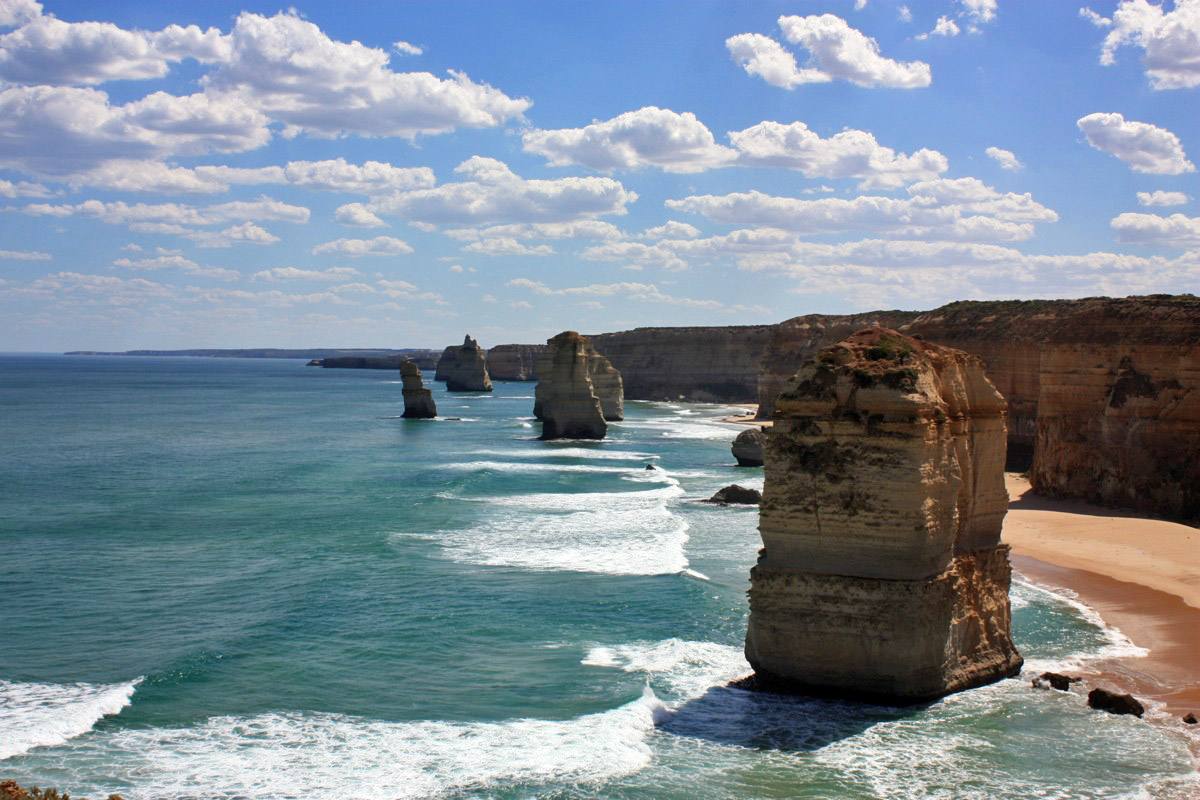
    Today, 12.03., we are doing the touristic part of the Great Ocean Road. That means, getting into the car, buckle up, driving one to two km, unfasten, getting out of the car, running around for 10 to 15 minutes, taking some pictures of stone formations, getting into the car, buckle up, … . All that between 10am and 2pm, when people in other countries have siesta.

    First we are stopping at the Cape Otway Lighthouse, “Australia’s most significant lighthouse”. For a lot of travelers it was the first sight of land after a months lasting journey. Then it goes step by step, Gibson steps and what do I know. At the 12 Apostles there are the most people. The 12 Apostles are a stone formation limestone standing in the sea (Wikipedia). The sea is washing them out underneath and some day they will fall. There is a huge parking lot, hundreds of tourists, visitors center, helicopter flights, and so on. Of the 12 Apostles there were 2004 nine standing. One fell in 2005. If it continues that way, they can close the business soon. Can’t believe that it took 7 hours to drive 170km.

    Wed. 13.03.2013. A quiet day. At forenoon we were visiting the Maritime Museum in Warrnambool. It’s an old heritage village where some people work in historic clothes for tourists.

    After that it’s only about 30 km to Port Fairy, with a stopover at Tower Hill Lake, a former volcano.

    Port Fairy is a small fishing village. There is a small Island, called “Griffiths Island” with a lighthouse on it. There is also a walking track with about 3km. The track is lined with sea gull corpses. We could not find out why. Maybe they just come here to die. Sometimes a kangaroo is hopping around. The last two days it got really cold. There is nothing left from the heat of the last days. Showers are pulling through from time to time. For dinner it is Fish&Chips. Great.

    Thu. 14.03. As we want to be in Adelaide at Sunday, to see the Grand Prix in TV and to celebrate St. Patricks Day there, and we also want to visit Barossa Valley before Adelaide, we have to drive far today. We make it to Robe, about 350km to Adelaide. Searching for food we are walking through the town center. At the harbor we found “Pollys Fish&Chips”. It was a small booth with a front building where you could also eat-in. As Fish&Chips tasted good the day before, we decided to have it again today. The previous serving was good, but not that much. Assuming that they were the same size I ordered a fish (Blue Grenadier), 2 calamari, 2 fish sticks. Each of us got a number when we ordered our meal. It took about five minutes until it was finished. The vendor handed each of us a packet which was the size of a piglet. One serving was enough for at least two people. But it was great and all that for 12.5 AUD.

    Tomorrow we are moving on to Barossa Valley. Until now we just had beer.

  • Melbourne

    Melbourne

    We are staying in Melbourne for three nights. The preparations for the Grand Prix next weekend are already in progress. The fence around the race track is almost finished. But the track is still open and we are driving down the track. We can catch a sight on the boxes and breathe a little bit of a race atmosphere.

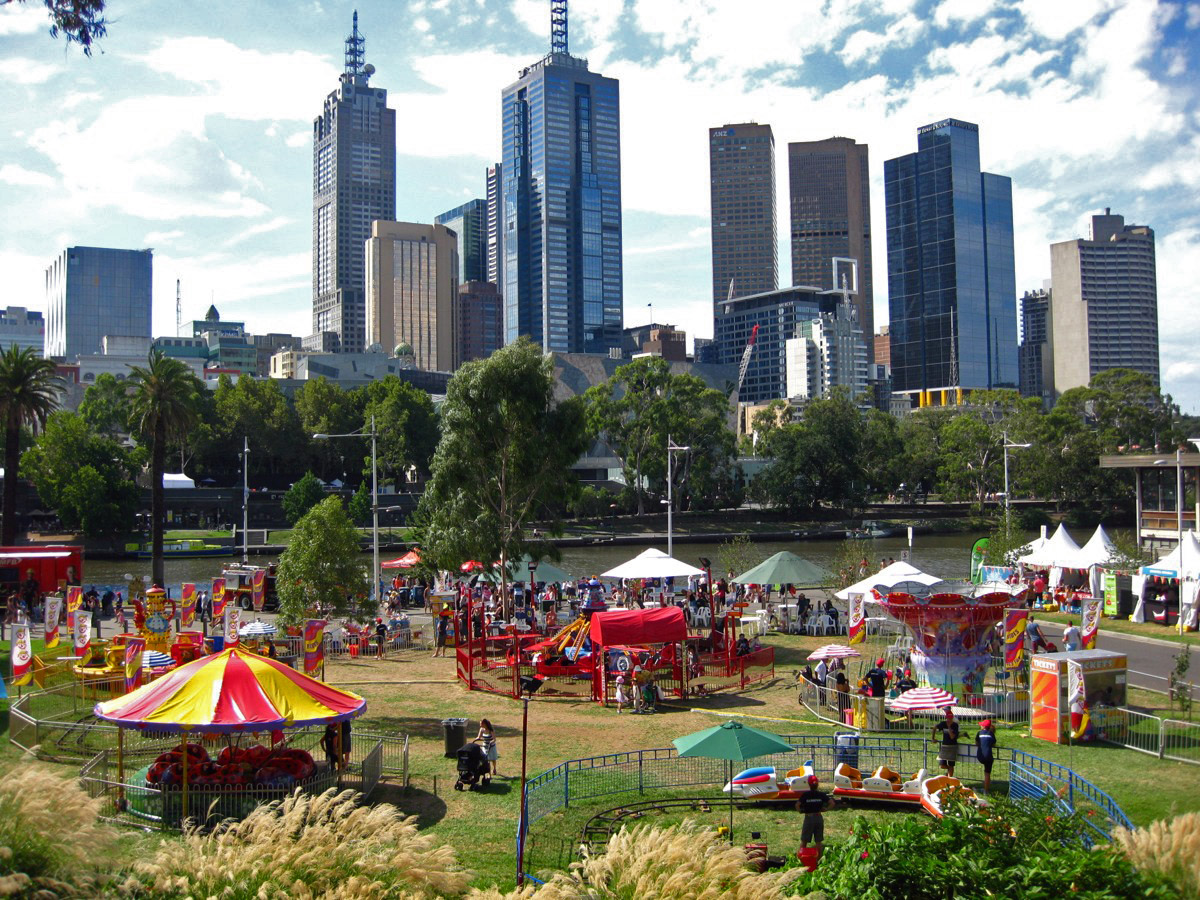
    In the inner city at the Yarra River, which is flowing through the city, there is the “Moomba festival”. It’s a huge carnival. There are Ferris wheels, shooting galleries, stages, jugglers, … . At the river there is a water skiing competition. The Moomba festival was first held in 1954 when Queen Elizabeth visited Melbourne. It has been held each year since then.

    Melbourne has about 3,3 million citizens and is a melting pot of nations. Uncountable people are moving through the city like ants. We enjoy two days without driving and also the nightlife where we hang around with local people.

    After Melbourne we are heading to Adelaide, where we want to spend the next weekend, on the Great Ocean Road.

    Thank you for reading, Jürgen

  • From Sydney to Melbourne

    From Sydney to Melbourne

    After a long flight I arrived at the Youth Hostel in Sydney on March 3rd at about 22:30. Just time enough for two welcome beers with my friends, before the bars closed.

    The next day we had a quick breakfast in a cafe close to the hostel, before we went to the airport to pick up the rental car at about noon. We drove only about 100km down the coast that day, to get out of Sydney. The vegetation is dry but dense. The way is seamed by Eucalyptus forests.

    I have problems with the time change. Sometimes I have a nap in the car and I am awake between 5am and 7pm before I can sleep again. Also there are big differences in temperature. During the day it gets 30 degrees celsius during night it is freezing cold.

    In Illawara we did the Treetop Walk. The walk is in average 25m high. There is also a tower with about 45m height. For me, who is afraid of heights, it’s not easy up there. Although I dare to get up the tower. My friends don’t understand that I jumped out of a plane two times with a tandem parachute, but don’t feel well at a height of 25m. After the Treetop walk we visited the Fitzroy Falls which are only a few km away.

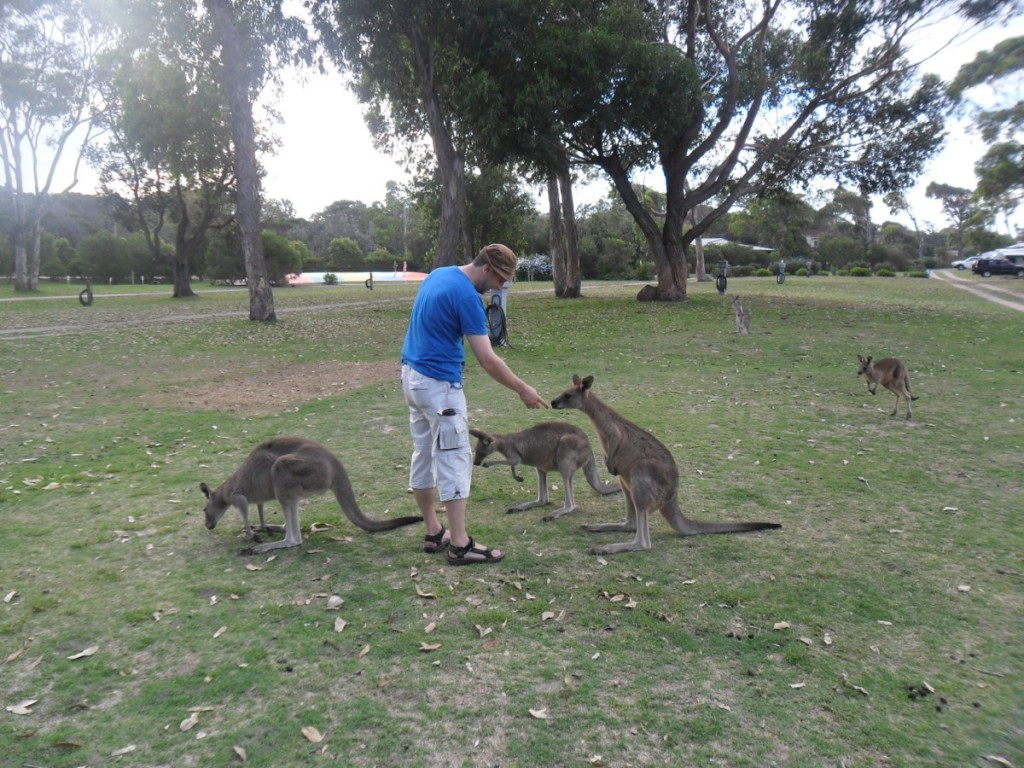
    The first contact with the Kangaroos.

    We arrived late in Pebbly Beach. At the beach there are four mid size Kangaroos having dinner. We approach them slowly. They did not feel disturbed by us. Of course they did not, I think we were at least the one millionth tourist. It is even possible to touch them while they continued eating. When they raised their head, they were about 1.5m heigh. At their rear legs they have two smaller and on larger claw, at their fore-paw they have five sharp claws. Even if they seem to be peaceful animals, I would not risk a fight with them.

    The vegetation is changing constantly on the ride to Melbourne. Sometimes there are dry forests, then there is soft rolling country and then we drive through rain forests with huge trees. The landscape is interrupted by long white beaches. Often there are distances where the trees are charred. Maybe rests of the fires a few weeks ago.

    The first ride on the left side of the road was unusual. It took some time to get used to it. My friends were very nervous for the first two hours. I made the usual mistakes, driving too close on the left side, being confused with indicator and windscreen wipers, did not take care on cars coming right hand.

    The second contact with Kangaroos was on Pambula beach, which is close to Merimbula. There were a lot of them on a camping site. They were hanging around between the campers. It was no big thing for the local people, but we were very excited to get so close to them. When I was suddenly surrounded by three of them I was a bit scared.

    The keeper of the Youth hostel in Merimbula told us to go to Raymond Island, if we want to see Koalas. We arrived there on the hottest time of the day. The were hanging lazy in the trees. They did not feel disturbed by our camera noise and our chatter. Sometimes they opened their eyes but soon fell asleep again.

    On our way to Melbourne we made also stop over at Phillip Island. There is a famous penguin parade where you can watch the penguins walking from there caves to the sea. We did not wait until evening but we visited a wildlife park where you could feed the animals. There were a lot of kangaroos in different size, also emus, dingoes and other animals. One of the emus followed us constantly. Even if he did not come to close we took care that he did not come to close. It’s beak looked a bit dangerous.

    So far the trip was great we were walking through Kangaroo and Koala poo just to get good pictures. Let’s see what the next weeks will bring.

  • Do you have a visa? … What?

    Do you have a visa? … What?

    It is Saturday March 2nd. Today is the flight to Sydney. I spent the night at my parents home, my dad is supposed to bring me to the airport. We get up at about 3am. I take a quick shower and we start close to 4am to the airport. We don’t have breakfast. My dad and I want to have it at the airport and he wants to take some time to have a look at the new building there. The flight plan is: Vienna to Dusseldorf by Air Berlin then to Abu Dhabi and Sydney by Etihad Airways. Planned departure is at 6:25am.

    I’m at the check-in counter. The whole procedure is taking longer than expected. The Air Berlin employee is typing on the keyboard and she is looking concentrated into the monitor. Suddenly she asks: “Do you have a visa?”

    . . . . Silence . . . .

    I:”What?”

    She: “I have problems checking you in for Sydney. Did you apply for an ETA visa?”

    I: “I need a visa for Australia?”

    She: “Yes, … … … … … But you can apply for it online.”

    Ok, no problem. I have got my laptop with me and there is free WLAN at the airport. I leave the check-in counter with my whole luggage and tell my dad the situation. I start to search in the Internet for “ETA visa Australia”. The homepage is found very quickly. I click “Apply online”, entered Name, Address, Birthdate. Choose Country. So what? There are only a few countries to choose from. Can’t be. So I read again.

    You can apply for an online visa, if you are from the following countries.

    Austria is not in the list. Reading on. If you are from one of the following countries you can get a visa from a travel agency, another agent or from the embassy in your country. I started getting nervous.

    Ok, I go to the Air Berlin counter and tell them my problem. Time is running. Then they say: “Sorry, we can’t do anything. The flights are bound. But Air Berlin is only responsible for the flight to Dusseldorf. But without a visa we can’t check you in.

    I asked them when the next flight will go. March 6. Meanwhile I check a flight-searchengine if there are any flights the next day. I too call the Australian embassy in Austria. Can’t be wrong. Maybe someone is already in the office at 5am. Someone is picking up the phone immediately. Just joking, there is a tape running. Office hours are from Monday to Friday from 8 until sometime.

    I said to my dad: “I don’t think I’m going to Sydney today”. Thanks to my dad, he came up with the idea: “Try it again. Maybe you can get to Dusseldorf. There you have a three hour stopover. You can try it again there. If not, you have to come home anyway.”

    Back to the Air Berlin counter. The employee does the best to find a solution. He can’t do anything, but maybe the employees from the airport flight service on the left. They greet me with the words: “Are you Mr. Bauer?” Looks like my problem made the round.

    A very big thanks to the employees from the airport flight service and the person from Air Berlin. For about an hour the did their best and tried a lot of possibilities to split the flights. Finally they succeeded.

    It’s 6:05am. Check-In officially closed at 5:55am. I move over to the check-in counter. The woman there is informed. She tells me that my luggage is going with the next flight. If I succeed to get a visa in Dusseldorf the luggage is checked through. If not, I have to pick it up from the lost and found counter. But If I take out all liquids, I can take the luggage in the cabin. Ok, all liquids out, shampoo, shower gel, deodorant, … you can get that in Australia as well. I too have to leave a bottle of Snaps at home. I wanted to take it with me. I got it from my grandma for birthday.

    The boarding pass was issued. At 6:20am, 5 minutes before take-off, I’m in the plane.

    From the speaker you can hear: “Boarding completed … ready for take-off … here is your captain speaking … there is a lot of traffic, we will start in 25 minutes.” I thought: They can’t do that to me. Every minute counts.

    At about 8:30 I’m in Dusseldorf. Passport control, there are a lot of people. I’m still in the transit area and have to get out to the departure area. Another passport control. The security person asked me: “Where are you coming from, with the whole luggage?” I told him the situation and ask him how I could get to the departure area quick. There, I needed to orientate. At the information counter, I ask, if there is a Etihad counter somewhere. “Yes, down there, on the left.”

    It’s 9am. The scheduled departure is 11am. At the Etihad counter I tell again my problem. They say: “No problem at all. Within a few minutes you will have your visa.” I calmed down. But when they said: “It looked different in the training”, I thought: That can’t be true. Am I on “Hidden camera”. I just waited that a lot of people jumped out from everywhere, screaming “We got you!”. After half an hour the visa was issued and I was able to check in.

    I could have used a sip of the Snaps I had to leave behind in Vienna. So, there was only a security check between me and the flight. I put my stuff on the conveyor belt and walked through the security control. At the other side I waited for my bags. One of them was separated. I just thought: WTF? The security person said: “Good day. Is that your bag? Yes? Could you take it over there please. We do a check for explosives.” Oh yes, off course we do that. I’m already prepared for everything.

    Hard to believe, but I found myself sitting in the plane. I got a not that bad seat where I had some place. And one of the toilets had a window – at least a great view.

    Thank you for reading, Jürgen.